The threshold is where most water and dust problems with large glass doors start. The choice is a trade-off between level access and sealing, and it has to be made with the floor levels and drainage of the actual opening in mind.
Raised threshold
The bottom track stands above the internal floor and the panels close against an upstand. Wind-driven rain and sand are stopped by the step. It is the most robust option for exposed positions and for openings on the windward side of a villa, and it is the easiest to retrofit into an existing floor. The cost is a step of a few centimetres.
Low threshold
A shallower track that reduces the step while keeping some upstand. A reasonable compromise for openings under a covered terrace or where the external floor is well below the internal floor.
Flush threshold
The track is recessed so the finished floors inside and out are level with the top of the track. It gives level access and a continuous floor, which is the look most people want. It only works reliably when:
- a drainage channel runs in front of or under the track and discharges somewhere real (a gully or a drained terrace)
- the external floor falls away from the door so standing water does not sit against it
- the channel and track drainage slots are kept clear of sand and leaves
Without those three, a flush threshold on an exposed opening lets water in during a storm. In new builds and full renovations the channel and falls can be designed in. In an existing finished terrace, forming them can cost more than the door.
Folding and sliding specifics
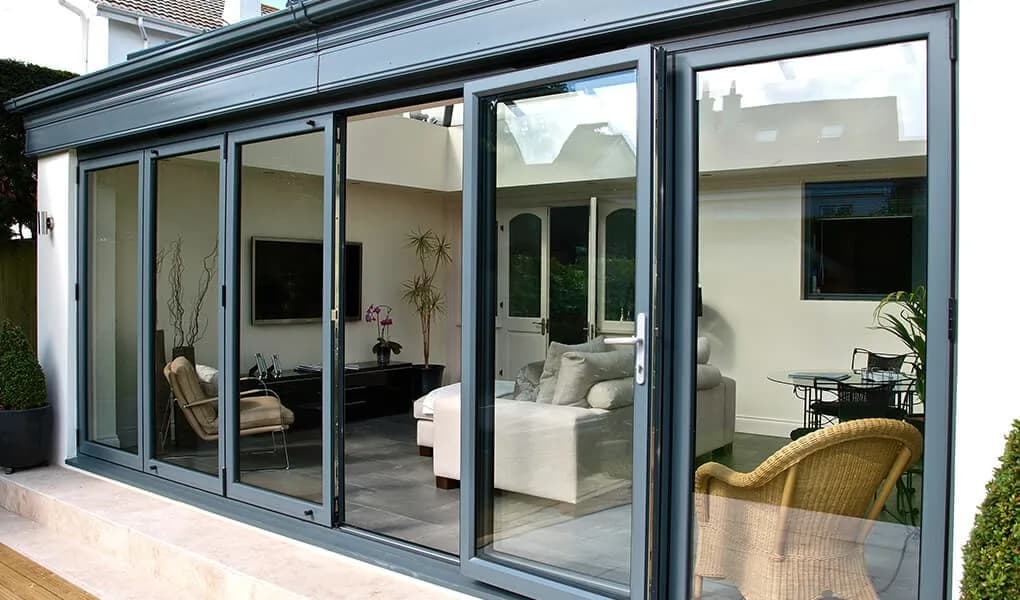
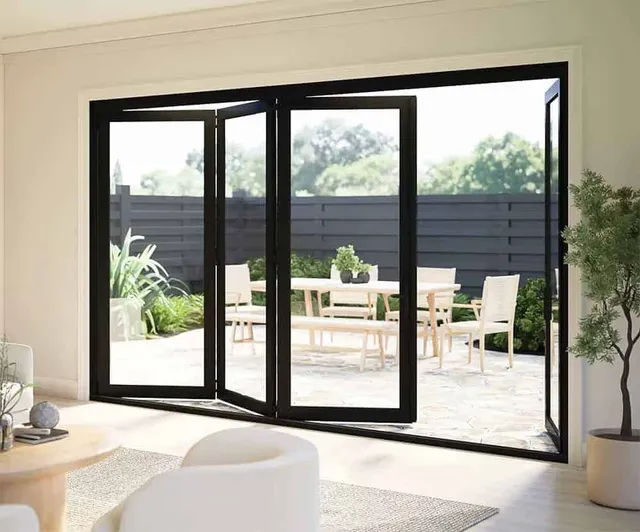
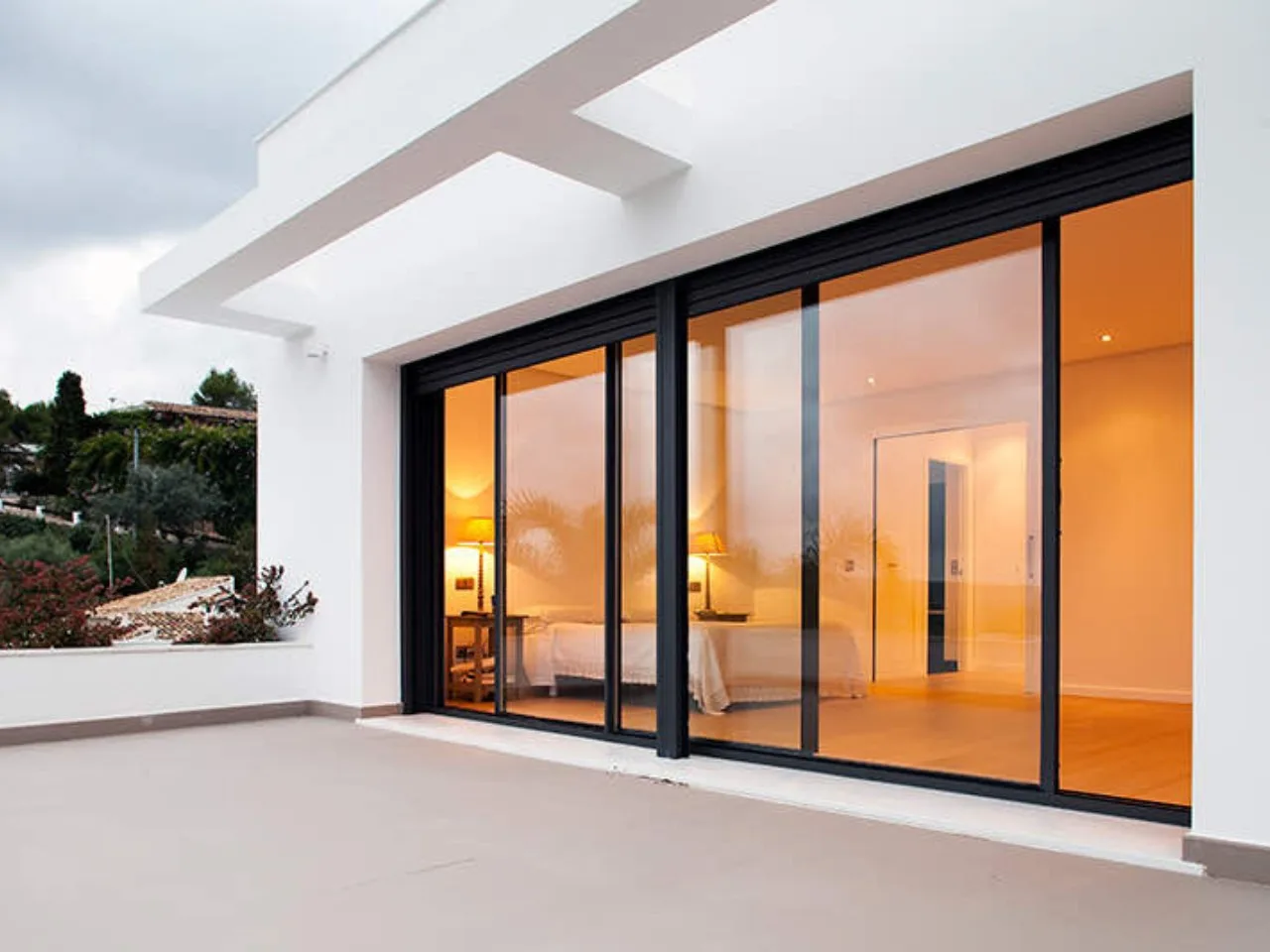
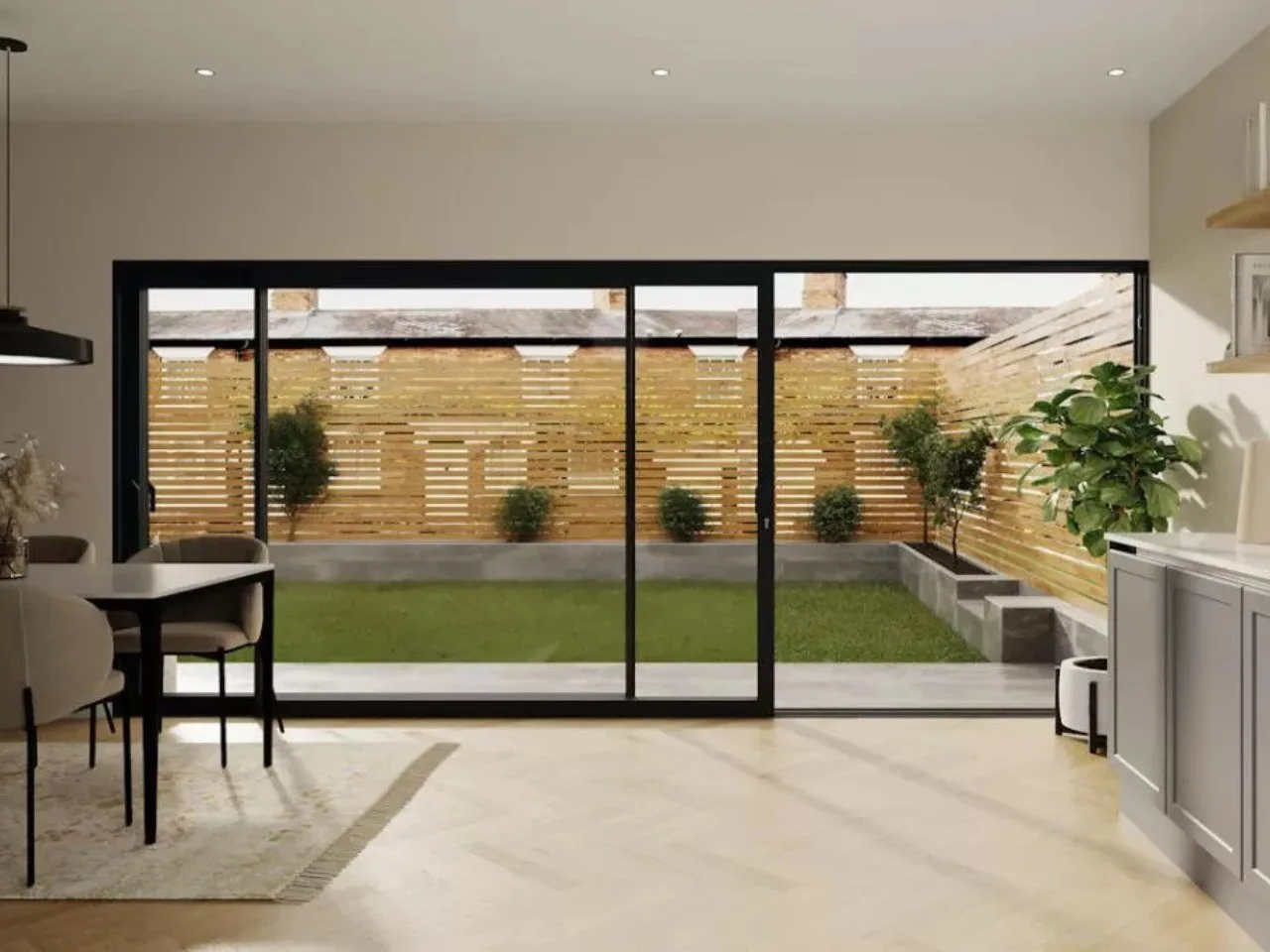
Folding doors seal against the threshold on every panel, so a raised or low threshold gives a clear advantage in exposed positions. Sliding doors carry the panel weight on the bottom track; recessed slim tracks are designed with integral drainage, and lift-and-slide hardware improves the seal when closed.
What we check on site
Floor levels inside and out, where water currently goes, whether a channel can be formed, the direction the opening faces and how exposed it is. The recommendation goes on the drawing with the threshold type stated. For product-specific notes see folding doors and slim sliding doors.